Flow & Water Quality Monitoring & Sampling
Reliable baseline data is the foundation of sound environmental assessment. Without it, it is impossible to demonstrate the significance of predicted impacts, calibrate hydraulic models, or satisfy the Environment Agency's requirements for environmental permits. Water Environment designs, procures and manages flow and water quality monitoring programmes to support planning applications, consenting processes, WFD assessments, and nutrient neutrality studies.
Flow Monitoring
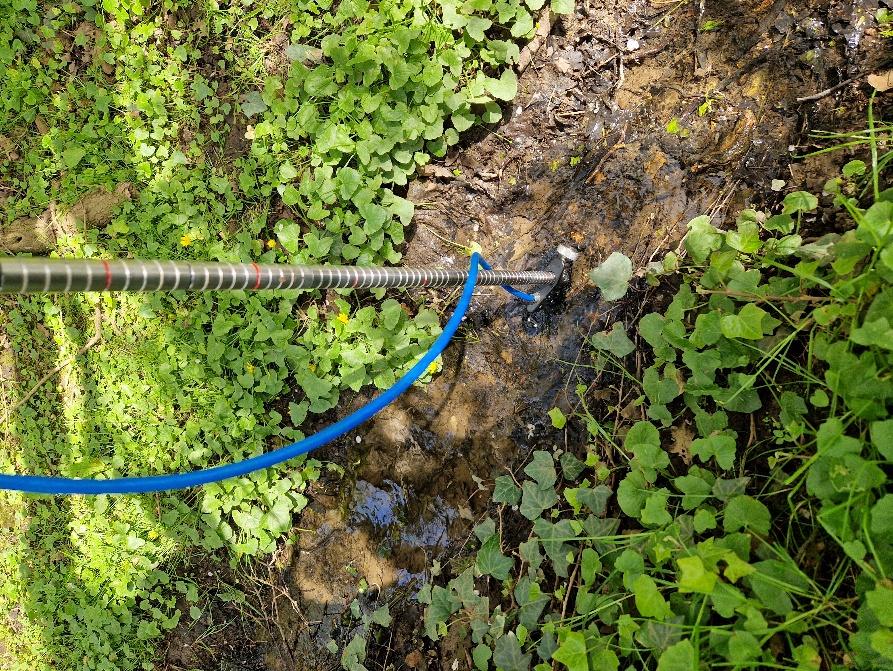
We procure and manage the installation of flow monitoring equipment on watercourses, combined sewers, surface water outfalls and drainage ditches. Monitoring campaigns are designed to capture a representative range of flow conditions, including baseflow, storm response and low-flow events. Data is used to establish baseline flow regimes, confirm low-flow and high-flow statistics, and provide calibration data for hydraulic and hydrological models.
Water Quality Sampling
We design targeted water quality sampling programmes and arrange collection and accredited laboratory analysis of samples for a full suite of determinands, including:
- Nutrients: total nitrogen, ammonia, nitrate, total phosphorus, soluble reactive phosphorus
- Biological oxygen demand (BOD) and chemical oxygen demand (COD)
- Dissolved oxygen, pH, conductivity and temperature
- Suspended solids and turbidity
- Heavy metals and hydrocarbons where relevant
Sampling is undertaken in accordance with Environment Agency and Natural England guidance, using appropriate quality assurance procedures and accredited laboratories.
Continuous Monitoring
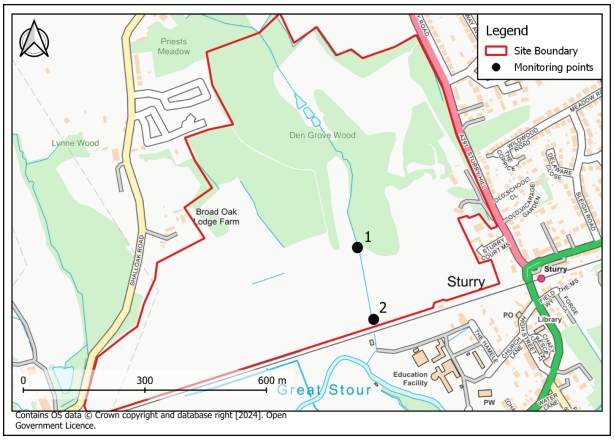
For long-term or unattended monitoring, we deploy logger-based instruments to record water level, flow, temperature and water quality parameters at high temporal resolution. Continuous records are particularly valuable for nutrient neutrality assessments, where annual load calculations require data across the full range of hydrological conditions.
Data Analysis and Reporting
Collected data is rigorously quality-controlled, analysed statistically, and presented in formats suitable for submission to the Environment Agency, water companies, Natural England and Local Planning Authorities. Reports include hydrographs, chemographs, load calculations, and plain-language interpretation of results.
How we work
- Programme design — we define what needs to be measured, where and for how long to answer the question, whether that is model calibration, a permit baseline, or a nutrient load calculation.
- Installation and sampling — we procure and manage the installation of monitoring equipment and the collection of samples, with quality assurance throughout.
- Laboratory analysis — samples are analysed for the agreed determinands by accredited laboratories.
- Analysis and reporting — we quality-control and interpret the data and present it in a form suitable for the Environment Agency, water companies and planning authorities.
Why Water Environment?
We commission monitoring because we use the data ourselves — to calibrate the hydraulic models, quantify the nutrient budgets and underpin the permit applications we produce. That means our programmes are designed by the engineers who know exactly what the data has to prove, rather than collecting numbers for their own sake. We work across all of England and Wales.
We are members of the Chartered Institution of Water and Environmental Management (CIWEM) and hold professional qualifications with the Institution of Civil Engineers (ICE).
Related Projects
Bicester Town Centre, Oxfordshire
River Diversion · Hydraulic Modelling · Flood Risk Assessment · Environmental Permitting
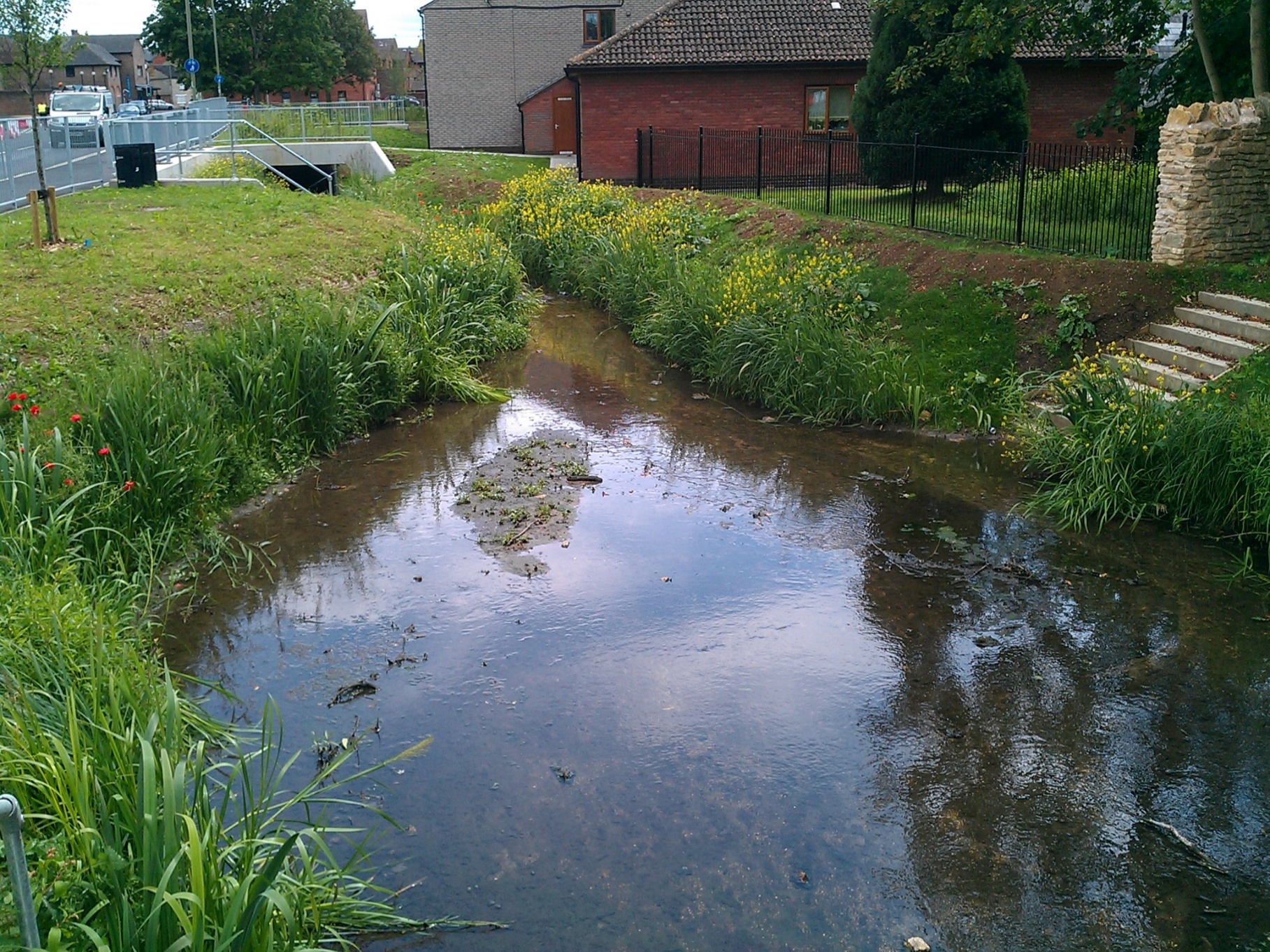
Water Environment led the river diversion and environmental design for Bicester Town Centre's major regeneration scheme, relocating 180m of the canalised River Bure and creating improved habitat.
Sturry Monitoring
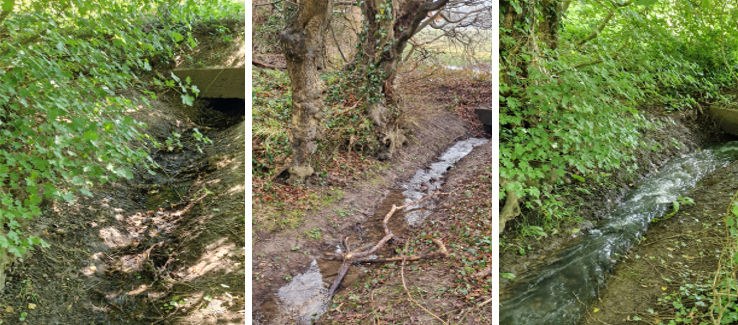
Flow & Water Quality Monitoring · Environmental Permitting
Water Environment provided specialist consultancy services for this project.