Sweechgate
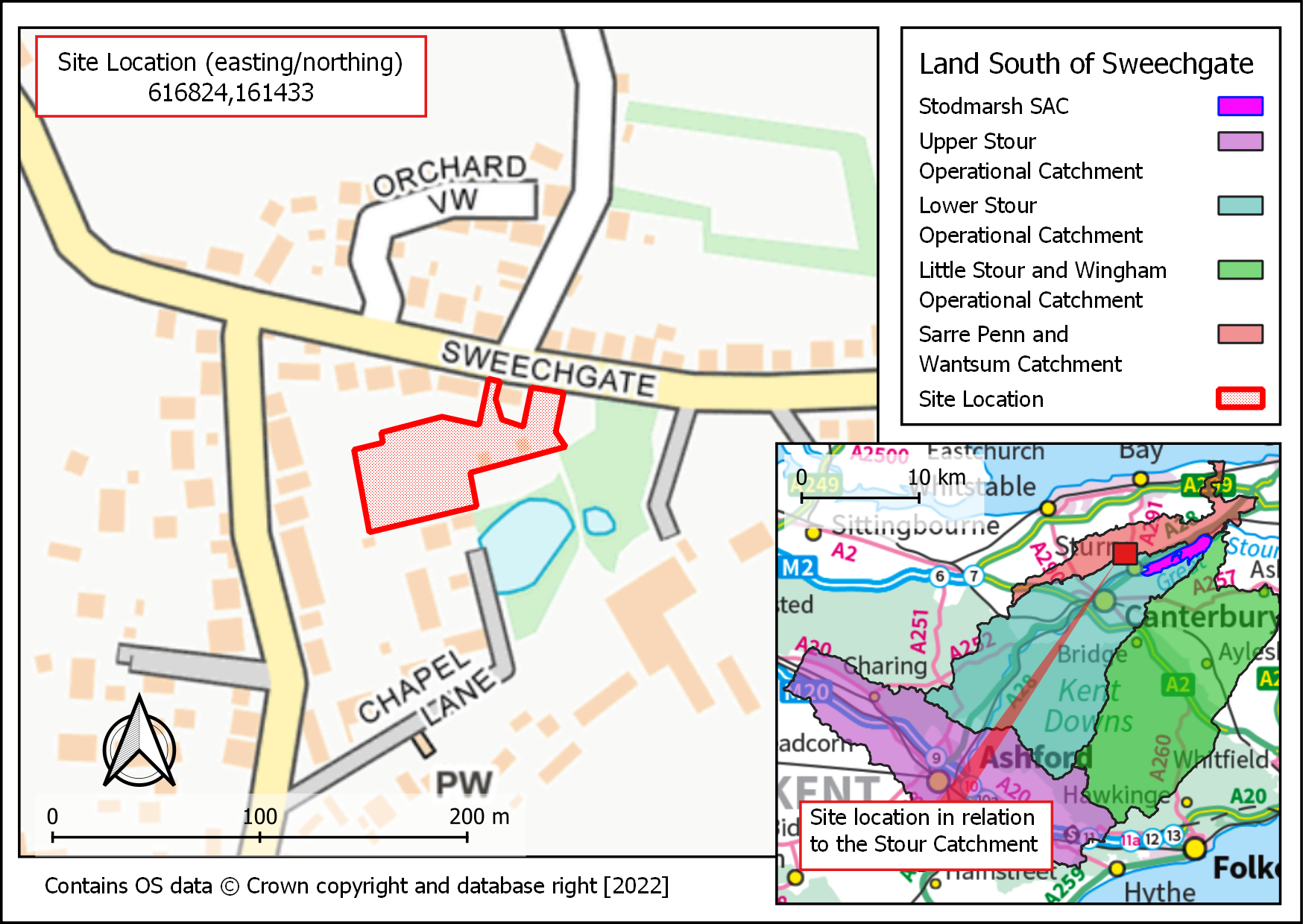
The proposed development site comprised a 0.38 ha parcel of land on the northeastern edge of Canterbury. The scheme involved the construction of nine houses within an area of existing open space, located within the Sarre Penn and River Wantsum sub-catchment of the River Stour.
Client: Simon Patience New homes
Status: Planning Permission granted
Services
Flood Risk Services
- Flood Risk Assessment (FRA)
- Sustainable Drainage Strategy
- Flood Defence (Mitigation) Strategy
- Flood Investigation
- Hydrology & Hydraulic Modelling
- Flood Emergency Plan
- Basement Impact Assessment (BIA)
- Groundwater Flooding
- Expert Witness
Environmental Services
- Nutrient Neutrality
- Flow & Water Quality Monitoring & Sampling
- River Geomorphological Survey & Assessment
- Water Framework Directive (WFD) Assessment
- Water Resources Assessment
- Environmental Impact Assessment (EIA)
- Air Quality Assessment (AQA)
- Catchment Management Plans
- Environmental Permits, Licences & Consents
- Expert Witness
Engineering Services
- Sewerage Design
- Sustainable Drainage Systems (SuDS) Design
- Landscape Amenity & Sport Facility Drainage
- Earthworks Design
- River Design
- Roads & Driveways
- Expert Witness
Project details
At the time of the application, nutrient mitigation guidance was still evolving. This provided an opportunity to explore potential mitigation strategies and engage directly with Natural England to establish their acceptability.
The initial mitigation approach involved treating wastewater onsite using a package treatment plant, with discharge to the foul sewer under a trade effluent licence. This strategy was based on the relatively high permit limits at Canterbury WwTW, alongside the ability of modern package treatment systems to achieve lower nutrient concentrations. In theory, this would reduce the site’s nutrient budget.
However, this approach is now explicitly identified as unacceptable within current guidance, in part due to the outcomes of this project. The reasoning is twofold. Firstly, reducing the nutrient concentration of influent entering the municipal treatment works can increase operational costs, which led to objections from Southern Water. Secondly, and more critically in terms of nutrient neutrality, Canterbury WwTW operates under a discharge permit with fixed concentration limits. As a result, total nutrient loading is driven primarily by discharge volume rather than influent concentration, undermining the effectiveness of this strategy.
A subsequent approach sought to discharge treated effluent from an onsite package treatment plant to a drainage field. This was supported by the argument that achieving nutrient neutrality without onsite treatment was not feasible. However, the Environment Agency rejected this proposal, establishing a precedent that such an approach is insufficient for nutrient neutrality compliance.